What Is a Double Boiler? How It Works & How to Use One
If you’ve ever hit a recipe that says “melt the chocolate in a double boiler” and had no idea what that meant, you’re not alone. It’s one of those kitchen terms that shows up constantly in baking and dessert recipes but is rarely explained.
What Is a Double Boiler?
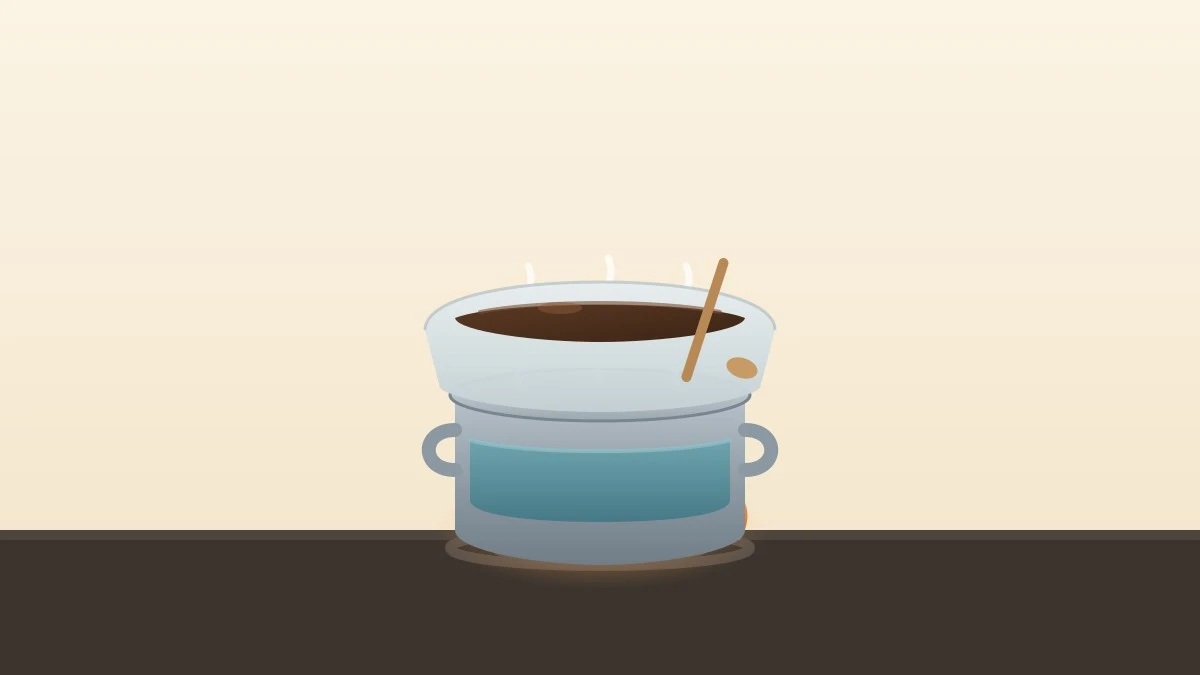
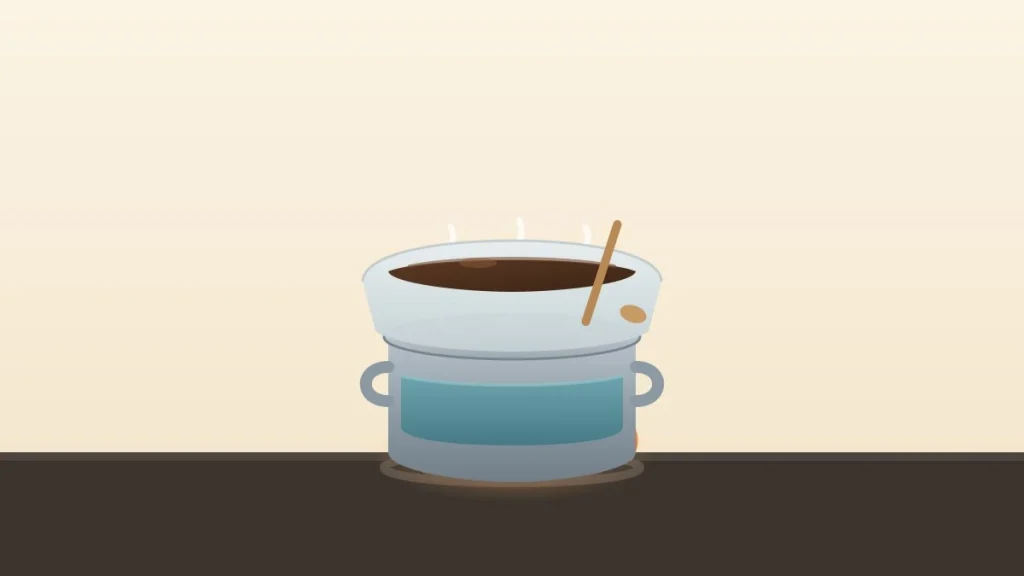
A double boiler is a two-part cooking setup made of a bottom pot filled with simmering water and a second pot or heatproof bowl that sits above it. Instead of heating your food directly over a burner, the food sits in the top container and is warmed gently by the steam rising from the water below.
The point of a double boiler is control. Some ingredients — chocolate, eggs, delicate sauces — burn, curdle, or separate almost the moment they touch direct heat. A double boiler removes that risk by keeping the heat gentle and steady.
You can buy a double boiler as a matched set, or you can make one at home with a saucepan and a mixing bowl you already own. Both work the same way.
How Does a Double Boiler Work?
Here’s the part most explanations skip: a double boiler works because water can only get so hot.
Water boils at 212°F (100°C) at sea level, and it can’t get any hotter than that — extra heat just makes it boil faster, not hotter. So when the water in the bottom pot simmers or boils, the steam rising off it is also capped at that same ceiling.
That steam is what actually heats your food. It rises, touches the underside of the top pot or bowl, and transfers its heat there, warming whatever’s inside. Because the steam can never exceed the boiling point of water, the food in the top container is protected from ever getting hot enough to scorch, seize, or curdle — even if you leave it on the heat a little too long.
Compare that to cooking directly in a pot on a burner, where the metal touching the flame can climb to several hundred degrees in seconds. There’s no natural ceiling on that heat, which is exactly why direct heat is risky for delicate ingredients and a double boiler isn’t.
This is also why the setup matters: if the top pot or bowl actually touches the water instead of sitting above it, you lose that protection. You’re no longer relying on gentle steam — you’re boiling your food directly, which defeats the purpose. More on that in the mistakes section below.
Double Boiler vs. Bain Marie vs. Water Bath: What’s the Real Difference?
These three terms get used loosely, and honestly, culinary sources don’t always agree on where the lines are. Here’s what’s actually consistent across them, and where the real distinction lies.
Bain-marie is the broader term. It’s French for “Mary’s bath,” and in professional kitchens it’s used as an umbrella term for several different water-based, indirect-heating methods — including double boilers, oven water baths, and even the steam tables restaurants use to keep food warm. So when someone calls a double boiler a “bain-marie,” they’re not wrong; they’re just using the more general name for the same stovetop setup.
Water bath, on the other hand, usually refers to something meaningfully different in home cooking: an oven method. You put your food in its own dish (like a cheesecake in a springform pan), then set that dish inside a larger pan filled with an inch or two of hot water, and bake the whole thing together. The water surrounds the dish rather than just heating it through steam from below, and the goal is usually gentle, even, moist heat in the oven rather than stovetop melting or thickening.
So the practical distinction that matters for a home cook:
| Double Boiler | Oven Water Bath | |
|---|---|---|
| Where it’s used | Stovetop | Oven |
| Setup | Top pot/bowl sits above the water, heated by steam | Food’s dish sits inside a larger pan filled with water |
| Typical uses | Melting chocolate, making custards and sauces, keeping food warm | Baking cheesecakes, crème brûlée, flan, custard-based desserts |
| Also called | Bain-marie | Bain-marie au four |
If a recipe just says “bain-marie” without more context, check whether it’s a stovetop or oven step — that’ll tell you which method it actually means.
Types of Double Boilers
You don’t need a dedicated double boiler set to use this technique, but if you’re deciding whether to buy one, here’s what actually differs between the common options.
Stainless Steel
Matched stainless steel double boiler sets are durable, heat up evenly, and won’t crack or shatter. They’re a reasonable choice if you cook with this method often — for tempering chocolate regularly, for example. The tradeoff is that stainless steel isn’t transparent, so you can’t see your ingredients melting without lifting the lid or stirring.
Glass or Pyrex
A heatproof glass bowl set over a saucepan is probably the most common home version, and for good reason: you can watch exactly what’s happening to your ingredients, which makes it easier to catch chocolate just as it finishes melting instead of overheating it. The catch is that glass needs to be genuinely heatproof (borosilicate glass like Pyrex, not just any glass bowl), and it should never go from cold straight onto a hot burner — more on that risk in the safety section.
Improvised Bowl + Saucepan
This is simply a saucepan and a heatproof mixing bowl that fits snugly on top — no dedicated equipment required. It works exactly as well as a purpose-built set, which is why most home cooks never bother buying one. The only real requirement is a good fit between the bowl and the pot, which we’ll cover next.
None of these options is “better” in an absolute sense — they all rely on the same steam-heating principle. The choice comes down to whether you want visibility (glass), durability (stainless), or just want to use what’s already in your kitchen (improvised).
How to Use a Double Boiler
- Fill the bottom pot with 1 to 2 inches of water. You don’t need much — a double boiler runs on steam, not on a deep pool of boiling water. Too much water risks it touching the bottom of the top pot.
- Bring the water to a simmer, not a rolling boil. A gentle simmer produces plenty of steam without being aggressive. A hard boil can cause the top pot to rattle and can splash water up where you don’t want it.
- Set the top pot or bowl in place. It should rest on the rim of the bottom pot, with the bottom of the top container staying above the waterline, not touching the water itself.
- Add your ingredients to the top pot. Stir as needed — the gentle heat means you have more room for error than with direct heat, but stirring still helps everything melt or cook evenly.
- Check the water level occasionally for longer cooking times. If you’re making a sauce or custard that takes a while, glance at the bottom pot now and then to make sure it hasn’t boiled dry.
- Remove the top pot carefully when finished. It will be hot, and steam will escape from underneath — use a potholder and lift away from your body.
How to Make a DIY Double Boiler at Home
You almost certainly don’t need to buy anything. Here’s how to put one together with what’s already in your kitchen.
What you need:
- A saucepan
- A heatproof mixing bowl or a second, slightly smaller pot
Getting the fit right matters. The bowl or top pot should rest on the rim of the saucepan and cover it almost completely, so steam stays trapped inside instead of escaping around the edges. If the bowl is too small, it’ll sink down toward the water. If it’s too large, it may sit unevenly or wobble. You’re aiming for a snug seal, not a perfect one — a little steam escaping around the edges is normal and fine.
Steps:
- Fill the saucepan with 1 to 2 inches of water — enough to generate steam, not so much that it’ll reach the bottom of the bowl once it’s in place.
- Set the bowl on top and check that its bottom stays clearly above the water level.
- Bring the water to a gentle simmer over medium-low heat.
- Add your ingredients to the bowl and stir as it heats.
This improvised version works exactly as well as a store-bought set for home cooking. The only downside is convenience — you’ll be using a mixing bowl you might want for something else, and there’s no handle or pour spout built in.
What Can You Cook or Melt in a Double Boiler?
The common thread across everything a double boiler is good for: ingredients that break down, curdle, or burn easily under direct, uneven heat.
Melting chocolate. Chocolate seizes — turns from smooth to grainy and clumped — when it’s exposed to high heat too quickly or when even a small amount of water gets into it. The gentle, even heat of a double boiler avoids the temperature spikes that cause seizing.
Making custards and curds. Recipes like lemon curd or crème anglaise rely on slowly cooking egg yolks to thicken them without scrambling them. Direct heat can turn eggs from silky to scrambled in seconds; the capped heat of a double boiler gives you much more control and a wider margin for error.
Hollandaise and other egg-based sauces. Hollandaise is an emulsion of egg yolks and melted butter, and it’s notoriously prone to breaking (separating) if it gets too hot. A double boiler is the standard method for making it safely.
Melting butter with other ingredients. When a recipe calls for melting butter together with chocolate or sugar without separating or burning either one, indirect heat again does a better job than a direct flame.
Gently rewarming sauces. If a sauce has already been made and just needs to be brought back to serving temperature without breaking, a double boiler is a safer option than a direct burner.
Double Boiler Substitutes
If you don’t want to set up even an improvised double boiler, you have a couple of other options — though they come with real tradeoffs.
Microwave, in short bursts. For melting chocolate specifically, you can microwave it in 15–20 second intervals, stirring between each one. This works, but it’s easy to overheat in a single burst since a microwave heats unevenly, and there’s no steam ceiling protecting you the way there is with a double boiler. It takes more attention, not less.
Very low direct heat with constant stirring. In a pinch, you can melt or warm delicate ingredients directly in a heavy-bottomed pot over the lowest possible heat, stirring constantly. This is riskier than either of the above — it’s easy to misjudge “low” heat, and there’s no built-in temperature cap. It’s a last resort, not a real substitute.
Neither of these fully replaces what a double boiler does, which is why most cooks default back to a bowl-and-saucepan setup rather than relying on these workarounds regularly.
Common Mistakes, Troubleshooting & Safety
Most double boiler problems come down to a handful of predictable issues. Here’s what tends to go wrong and how to fix it.
Water Touching the Top Pot
The mistake: Too much water in the bottom pot, or a top pot that sits too low, lets the water make direct contact with the underside of the top container.
Why it matters: This defeats the entire purpose. You’re no longer relying on gentle steam — you’re boiling your food directly, with none of the temperature protection a double boiler is supposed to provide.
The fix: Use only 1–2 inches of water, and check the fit before you start heating. If your setup keeps having this problem, you likely need a top pot or bowl that sits a bit higher on the rim of the bottom pot.
Letting the Bottom Pot Boil Dry
The mistake: During longer cooking times (a slow-melting sauce, for instance), the water in the bottom pot can fully evaporate without you noticing.
Why it matters: Once the water’s gone, the bottom pot is just sitting empty over direct heat, which can scorch the pot and, more importantly, stops protecting whatever’s in the top container.
The fix: For anything that takes more than a few minutes, check the water level periodically and top it up with a bit more hot water if it’s getting low.
Condensation Dripping Into Food
The mistake: Steam condenses on the underside of the lid (if you’re using one) or on the inside walls of the top pot, then drips back down into your ingredients.
Why it matters: For melting chocolate specifically, even a small amount of water can cause it to seize into a grainy, unusable mess.
The fix: Avoid covering the top pot with a lid while melting chocolate. If your bowl has condensation forming on its sides, wipe it down with a dry towel before it has a chance to drip in.
Steam Burns
The mistake: Lifting the top pot straight up, or leaning over the setup to check on it, puts your hands and face right in the path of escaping steam.
Why it matters: Steam burns can be more severe than burns from hot water or a hot pan, because steam carries more heat energy and can also condense on skin, releasing that heat directly.
The fix: Lift the top pot away from your body, not straight up toward your face. Use a potholder, and give escaping steam a moment to clear before you lean in to check your food.
Glass Thermal Shock
The mistake: Taking a glass bowl straight from the refrigerator, or even just room temperature, and setting it directly over already-simmering water — or setting a hot glass bowl straight onto a cold, wet countertop.
Why it matters: Sudden, uneven temperature changes can cause glass to crack or shatter, even glass marketed as heatproof. This is a real risk with any glass cookware, not just double boilers.
The fix: Let a cold glass bowl come closer to room temperature before using it over simmering water, and set hot glass bowls down on a dry towel or trivet rather than directly on a cold surface.


